Thoracic reach
A guided reach pattern helps the user feel rotation and extension through the upper back without turning the session into a workout.
 Renava Daily posture training
 Upper back mobility
Renava treats upper-back mobility as part of a complete posture habit: chest opening, rib movement, thoracic reach, shoulder control, breathing, and support work.
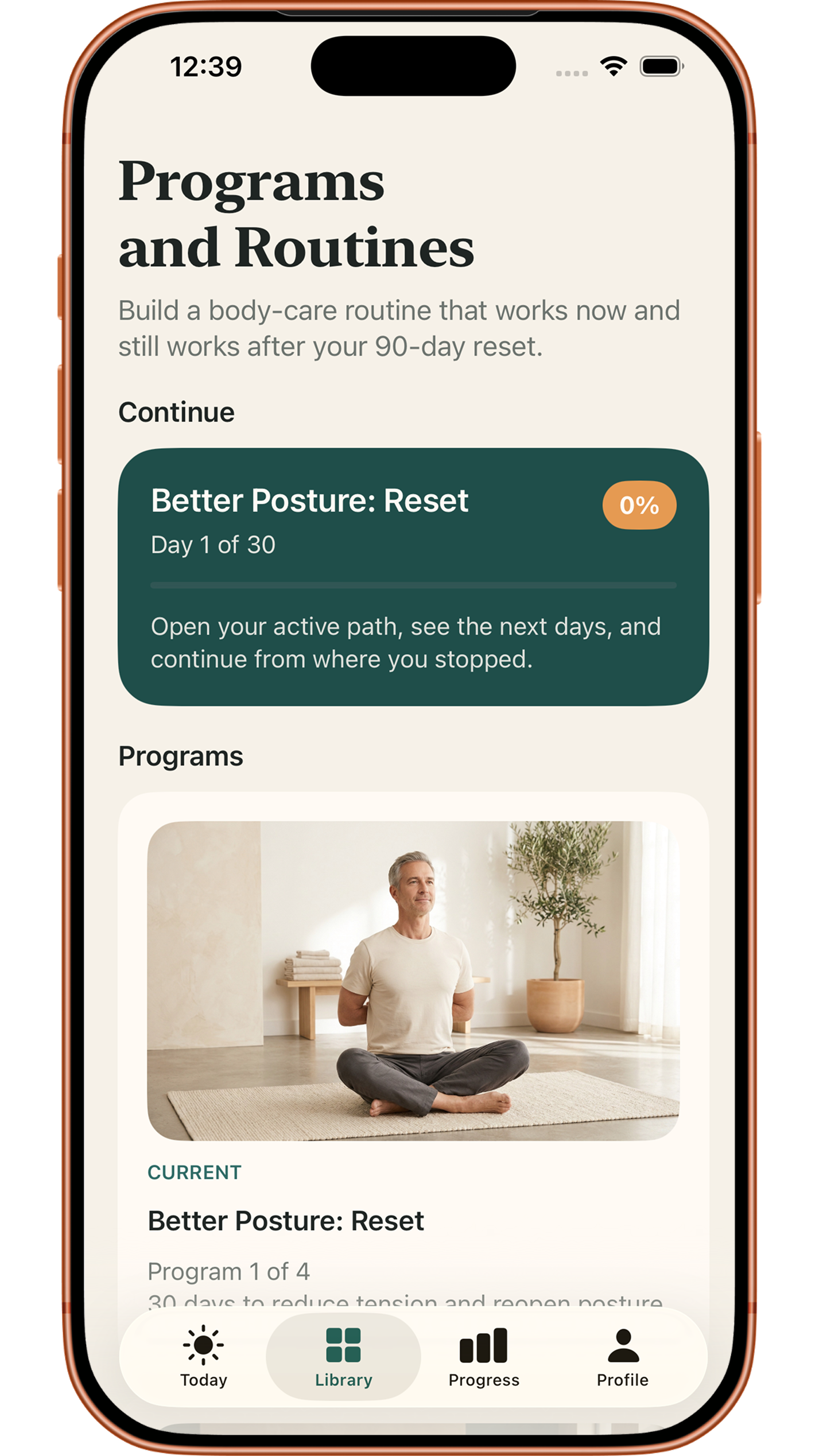
For Renava, upper-back work belongs in a chain. The user needs chest opening, shoulder blade control, thoracic movement, and eventually support work that helps the new range feel usable.
A guided reach pattern helps the user feel rotation and extension through the upper back without turning the session into a workout.
Wall-based movement brings the shoulders, upper back, and ribs into one controlled pattern.
Shoulder blade control gives the upper-back session more structure than passive stretching alone.
Renava's first-week content includes an Upper Back Awareness session designed to give users a clearer sense of posture through the thoracic area and shoulder blades.
The first-week upper-back awareness session is designed around 10 minutes, long enough to feel complete but short enough to repeat.
The session can include thoracic reach, wall slides, scapular holds, and breathing reset.
The goal is awareness and control, not forcing a dramatic posture change in one day.
Desk work often keeps the arms forward and the upper body fixed. Renava gives users guided ways to bring movement back to the upper back during or after screen-heavy days.
Doorway opening and chest-focused movements help balance the forward position many users hold at a desk.
Breathing reset patterns make upper-back mobility feel calmer and easier to control.
Scapular control and upper-back pull patterns connect mobility with support over time.
Upper back is a library focus area and also appears throughout the main program path, not just on one isolated screen.
The app labels Upper Back as a focus area for opening and stabilizing.
Upper-back mobility appears across Reset, Strengthen, Stabilize, and Maintain programming.
Short routines can bring upper-back work into desk resets, stretching, and evening mobility.
In Renava, upper-back mobility refers to guided movement around the thoracic spine, shoulders, chest, and ribs.
Examples include thoracic reach, wall slides, scapular holds, breathing reset, doorway opener, and shoulder blade control patterns.
No. Renava is built for home-friendly sessions, with optional equipment such as a wall, chair, doorway, mat, or resistance band.
No. The app is designed around guided sessions and simple cues that can work for beginners.
Upper-back mobility can be part of a posture practice routine, especially when connected with chest opening, shoulder control, and support work. Renava does not make medical treatment claims.
Follow guided Renava routines instead of guessing which upper-back exercise should come next.
Explore the connected parts of the Renava posture system: the app, routines, program path, desk resets, focus areas, and guided exercises.