
Using Renava
Posture exercises: a guided sequence you can follow
Follow this seated introduction in order: shoulder circles for 30 seconds, upper-body turns for 35 seconds and a gentle shoulder-blade squeeze for 50 seconds. These are existing Renava routine intervals, arranged here as a public sample. Allow extra time to watch, rest and change position.
Online guide: https://renava.app/guided-posture-exercises/
Prepare a stable place to practise
Use a solid chair without wheels, keep both feet supported and clear space around your arms. Place the screen where you can see it without repeatedly twisting your neck. Watch each silent demonstration before starting its interval.
This sample is for adults looking for general movement practice. It is not an assessment of which exercises will suit an injury or a diagnosed condition. Stop a movement that causes pain, dizziness, numbness or feeling unwell.
The three-movement sequence
| Order | Movement and interval | What to do |
|---|---|---|
| 1 | Seated shoulder circles · 30 seconds | Lift the shoulders gently, roll them back and let them settle. Keep the head still and use small, smooth circles. |
| 2 | Seated upper-body turns · 35 seconds in total | Cross the arms, turn the chest a little to one side, return to centre and change sides. Keep hips on the seat and do not pull on the chair. |
| 3 | Gentle shoulder-blade squeeze · 50 seconds | Bring the shoulder blades slightly closer together, pause briefly, then fully release. Keep breathing and avoid pushing the ribs forward. |
- Shoulder-circle setup and technique
- Upper-body turn: full written steps
- Shoulder-blade squeeze: movement and release
Movement time and the time you need
The movement intervals total 115 seconds: 30 + 35 + 50. This is not a promise of a complete 115-second session. First-time viewing, getting seated, pauses and changing movements take additional time. Keep the videos paused while reading.
Use one interval of each movement as the example sequence. There is no target number of repetitions within an interval: move slowly enough to stay controlled. You may finish earlier, skip a movement or end after the first one. An interval is a format, not a minimum you must tolerate.
Choose a manageable version
| What you notice | Change to try |
|---|---|
| You cannot follow a video and move at the same time | Watch once, pause it, then practise from the written cues. |
| The movement feels rushed | Make a smaller movement and fewer slow repetitions. Do not speed up to match a loop. |
| Turning the chest is uncomfortable | Skip the turn. Do not replace it with a forceful neck twist. |
| The squeeze makes you arch or tense | Reduce the effort and release fully; omit it if you cannot keep it comfortable. |
Repeat this sample or choose a program?
Repeat a manageable format when you want to learn the cues. Do not add time, repetitions and harder variations all at once. Record what you actually did and what you skipped. The sample has no claim to treat a condition or change appearance within a fixed time.
The app’s Desk Break is a different three-step routine: shoulder circles for 30 seconds, gentle head turns for 35 seconds and upper-body turns for 35 seconds. Its movement time is 100 seconds. The public sample above substitutes an already demonstrated shoulder-blade movement and is labelled separately.
- See the exact Desk Break routine
- Preview the longer program
- A first-session checklist for beginners
- Compare short routines and their purposes
- Choose stretching, movement practice or strengthening
- Cat–cow: mat setup and written steps
- Pelvic tilts: lying setup and controlled return
- Single-knee hug: support and changing sides
Questions about this guide
How many repetitions should I do?
The sample uses one timed interval per movement. Do slow, comfortable repetitions within that interval, returning to rest each time; there is no repetition target or requirement to finish the timer.
How often should I do this seated sequence?
Choose a repeatable break or practice opportunity rather than a fixed daily quota. This sample contains 115 seconds of movement intervals; it is not a full strength session or the whole activity you need in a day. Follow your chosen program or individual plan, and do not double sessions to make up a missed day.
Can I follow without sound?
Yes. These public clips are silent and the steps are written out. Watch first, pause, then try the movement. You do not need to keep up with the video loop.
Is this the same as Desk Break or the 90-day program?
No. This 115-second movement sample uses three public demonstrations. Desk Break uses a different sequence totalling 100 movement seconds. The program arranges longer sessions and progression.
Sources and editorial notes
External sources provide background and have not reviewed or endorsed Renava. Instructions and routine details describe the app team’s own material.
Follow your next session in Renava
See guided sessions, the program and your practice record. Check the current free and paid access in the app or your store before subscribing.


Your next useful step
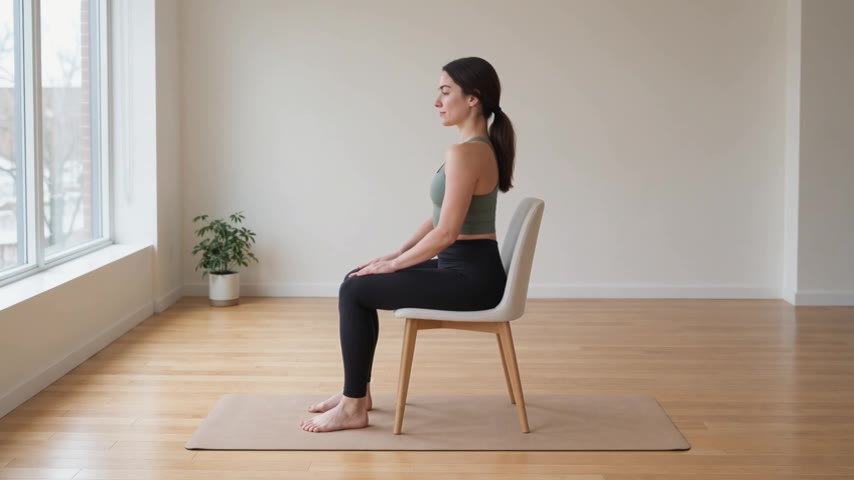 GuideShoulder rolls: seated technique and common mistakesLearn seated shoulder rolls with a Renava demonstration, clear movement cues, common mistakes and a simple way to use them during a desk break.
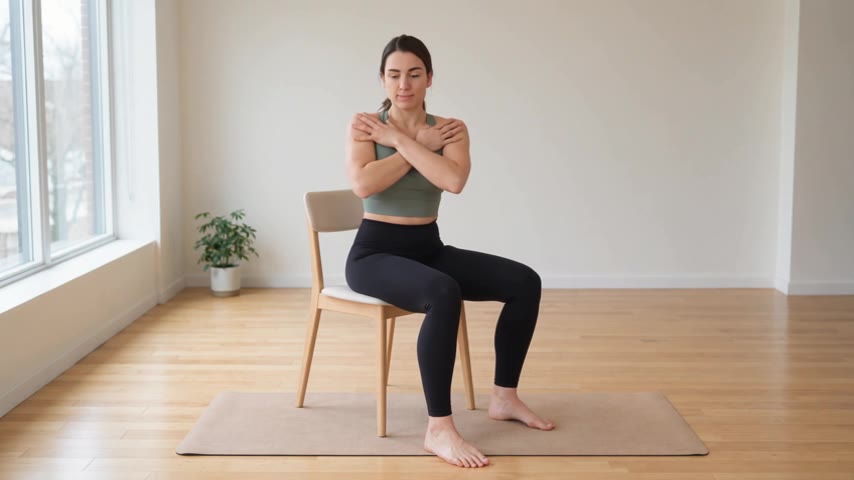 GuideSeated thoracic rotation: a gentle upper-body turnTry a comfortable seated upper-body turn with a Renava video, setup instructions and technique checks. Learn how it differs from turning only your neck.
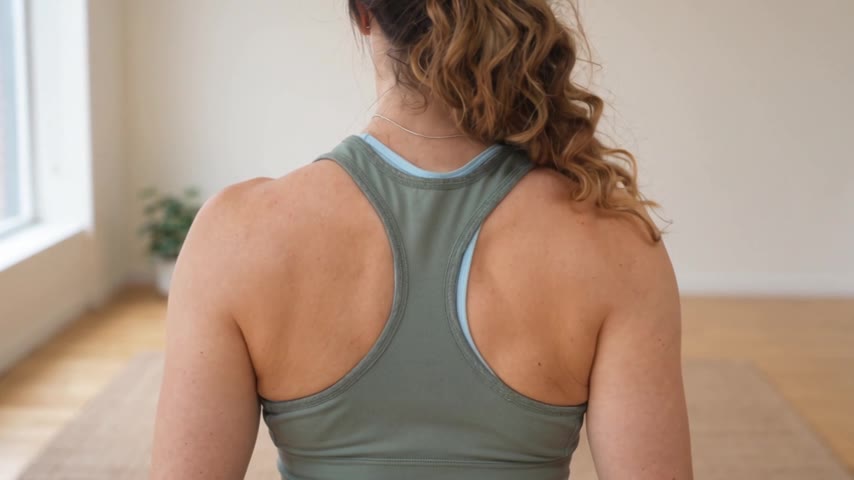 GuideShoulder-blade squeeze: gentle effort, full releaseFollow Renava’s gentle shoulder-blade squeeze with a demonstration, setup and common mistakes. Learn why releasing matters as much as squeezing.GuideA 90-day posture program: format, first week and accessPreview Renava’s 90-day posture program: stages, first week, a detailed eight-minute session example, equipment, maintenance and paid access.GuideRenava posture training app for iOS and AndroidSee how Renava works on iOS and Android: guided posture sessions, short routines, a 90-day program, practice tracking and clear access information.GuideWall slides facing the wall: a controlled shoulder movementLearn the towel-assisted wall slide facing the wall: setup, a comfortable upward reach, a slow return and the difference from back-to-wall angels.GuideWall angels: back-to-wall setup, reach and returnFollow the back-to-wall wall angel with illustrated positions, a controlled W-to-Y reach, range limits and a comparison with facing-wall slides.GuideDoorway chest stretch: supported setup and a gentle returnUnderstand a two-arm doorway chest stretch with illustrated support points, a small forward shift, a relaxed return and checks before practising.GuideWall exercises: choose the right slide or angel variationCompare forward-facing wall slides and back-to-wall angels, check supports and range, and choose a seated alternative when overhead movement does not fit.