
Guide
Posture exercises without special equipment
Start with seated movements that use your own comfortable range. “No special equipment” can still mean a stable chair or enough clear floor space. Choose the actual variation first, then check what it requires.
What “no equipment” means here
No special training equipment does not necessarily mean no support. The seated examples use an ordinary stable chair; floor examples need clear space and a suitable surface. Decide which variation you will use before clearing the room.
Choose a setup you actually have
| Available setup | Useful option | Check first |
|---|---|---|
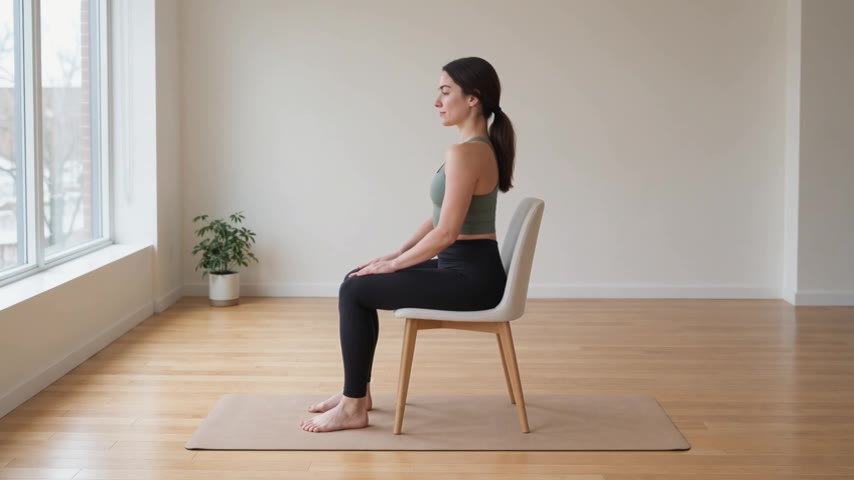
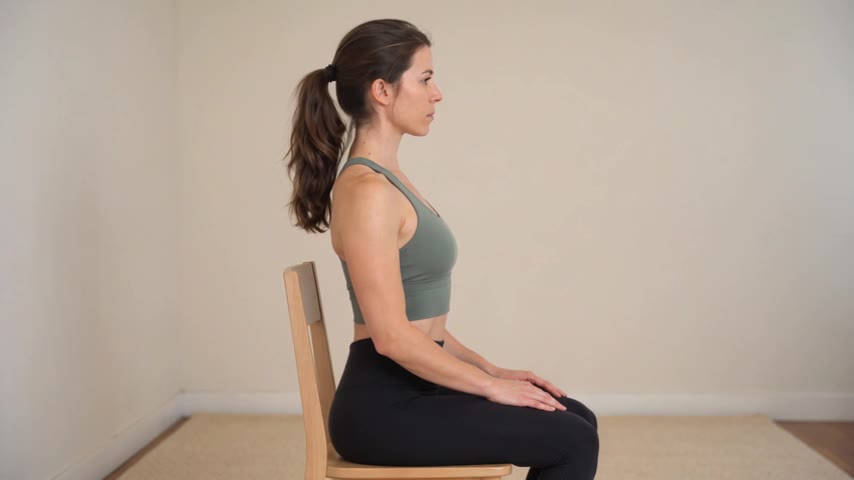
| Stable chair, feet supported | Public seated sample: shoulder circles, upper-body turns and shoulder-blade squeeze | Chair has no wheels and arms do not block movement. |
| Clear standing space | Morning Mobility: the public standing guide | Room for arm circles, turns and side stretches; no floor work. |
| Stable mat and comfortable access to the floor | Gentle Lower Back Mobility · 215 movement seconds | Lying with bent knees; enough room for knee rolls and supported single-knee hugs. |
| Mat plus clear standing, kneeling and lying space | Full-Body Stretch · 385 movement seconds | Comfortable transitions through hands-and-knees, half-kneeling and lying; check every movement first. |
| Comfortable floor space | A suitable program session | Preview lists the positions and support required; some sessions also use a wall. |
Start with the chair-based sample
- Clear space beside the chair and put the phone where it is easy to see.
- Watch the shoulder-circle clip once, then follow its 30-second sample interval if comfortable.
- Pause before the 35-second seated turn and 50-second shoulder-blade interval. Skip any unsuitable movement.
- Finish in a comfortable resting position and record what you followed. The 115 seconds of movement exclude viewing, preparation and pauses.
Avoid improvising supports
Do not balance on a wheeled chair or pull on unstable furniture to create a stretch. A different setup can change the exercise. If you do not have the required support, choose a genuinely different session rather than trying to reproduce the name at any cost.
Choose your next practice
Use a single technique guide when the movement is unfamiliar. Use the sample to combine movements you understand. Choose the app program if you want an arranged sequence with progression and a preview of each session.
Questions about this guide
Can I practise without buying a band or posture corrector?
The public seated sample needs a stable chair and space for the arms, with no band or brace. Other sessions may require different supports, so check the exact variation.
Can I use a swivel chair?
Use a solid chair without wheels for these demonstrations. If you cannot make the setup stable, choose another suitable activity rather than trying to hold the chair still while exercising.
Can I do this in bed?
These seated movements are demonstrated with a stable chair and feet supported. A soft bed changes that setup; this page does not teach a bed-based alternative.
Is this a complete back-strength workout?
This page offers mobility and stretching examples, not a complete back-strength plan. “No special equipment” describes the setup, not the training goal. For a strength goal, check which muscles are challenged, the effort required and how the work progresses.
Sources and editorial notes
External sources provide background and have not reviewed or endorsed Renava. Instructions and routine details describe the app team’s own material.
Follow your next session in Renava
See guided sessions, the program and your practice record. Check the current free and paid access in the app or your store before subscribing.


Your next useful step
 GuideShoulder rolls: seated technique and common mistakesLearn seated shoulder rolls with a Renava demonstration, clear movement cues, common mistakes and a simple way to use them during a desk break.
 GuideChin tuck exercise: how to do a seated chin glideSee Renava’s seated chin glide and learn the difference between sliding your head back, looking down and forcing your neck into a stretch.GuideA 90-day posture program: format, first week and accessPreview Renava’s 90-day posture program: stages, first week, a detailed eight-minute session example, equipment, maintenance and paid access.