Thoracic reach
A guided reach pattern can help users feel upper-back movement and rib position.
 Renava Daily posture training
 Thoracic mobility
Thoracic mobility is a useful bridge between upper-back movement, chest opening, ribs, and shoulders. Renava places those exercises inside guided routines rather than leaving users with isolated movements.
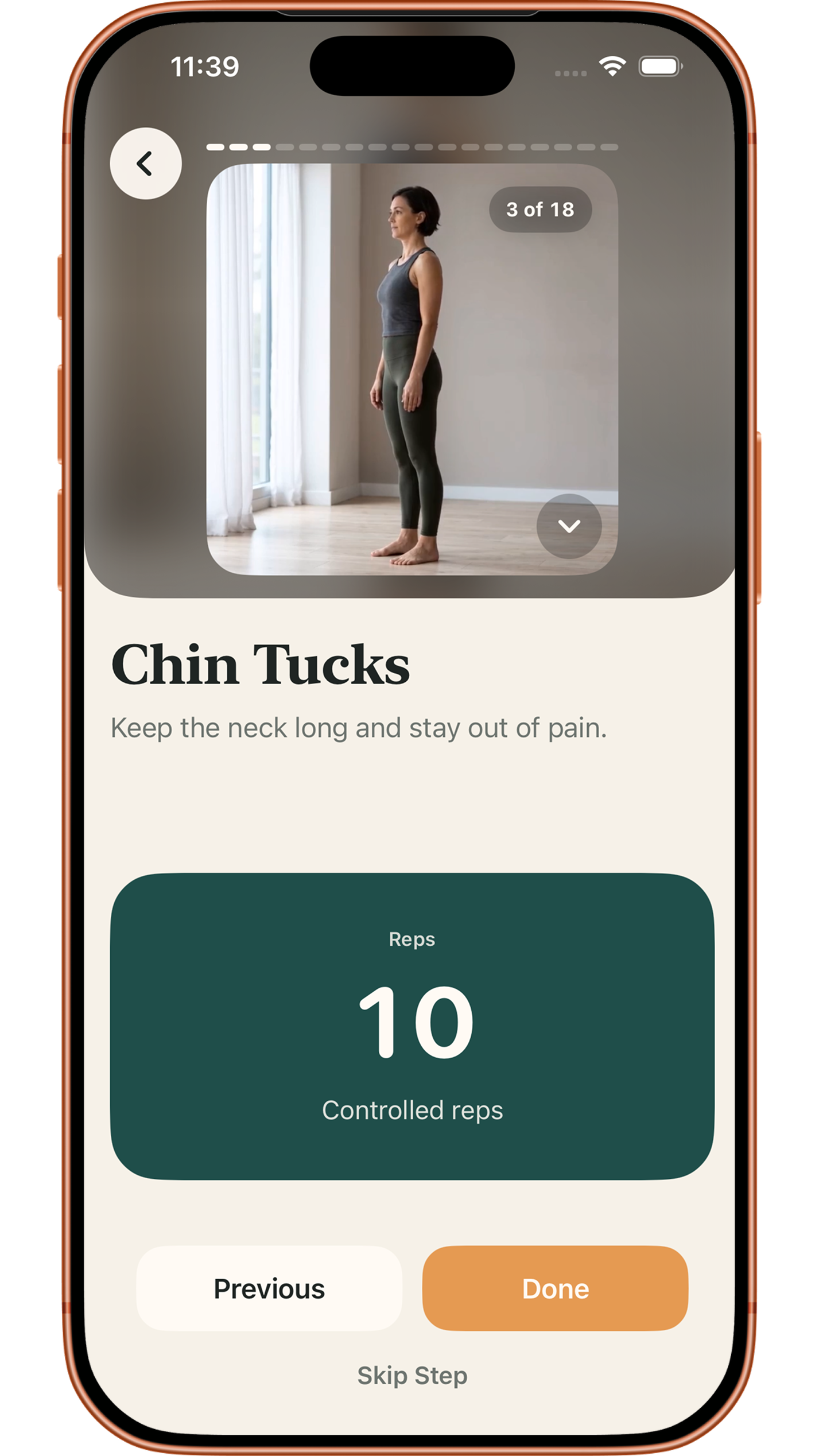
Renava uses approachable language for the upper back while still mapping to the search intent behind thoracic mobility.
A guided reach pattern can help users feel upper-back movement and rib position.
Wall-supported movement connects shoulders, ribs, and upper-back control.
Breath cues help keep mobility work calm and connected to posture awareness.
Thoracic mobility is not a standalone promise. It supports a broader posture routine when connected to shoulders, chest, and support work.
Early sessions can introduce gentle mobility and awareness.
Later sessions can add support and control around the upper back.
Short routines keep mobility work repeatable after the main path.
Most users searching this topic want practical movement they can do without a gym.
Some movements need only body position and breath.
Wall slides and wall-supported posture work are natural home options.
Optional supports can make sessions more comfortable.
They are movements that focus on the upper back and rib area, often connected with shoulder motion, chest opening, and breathing.
Renava includes upper-back mobility patterns such as thoracic reach, wall slides, scapular set, and breathing reset inside guided sessions.
Not exactly. It can include stretching-style movement, but it also involves control, breath, and shoulder position.
Yes. Renava is designed for home-friendly sessions.
No. Renava provides general wellness and fitness guidance.
Renava puts thoracic mobility into clear sessions with timing, cues, and progress.
Explore the connected parts of the Renava posture system: the app, routines, program path, desk resets, focus areas, and guided exercises.