Reduce neck and shoulder tension
This is a direct onboarding goal in the app and a high-intent search pattern for users looking for daily help.
 Renava Daily posture training
 Neck and shoulders
Renava gives users a calm way to work around neck and shoulder tension: gentle control, shoulder opening, upper-back movement, breathing cues, and clear boundaries around pain.
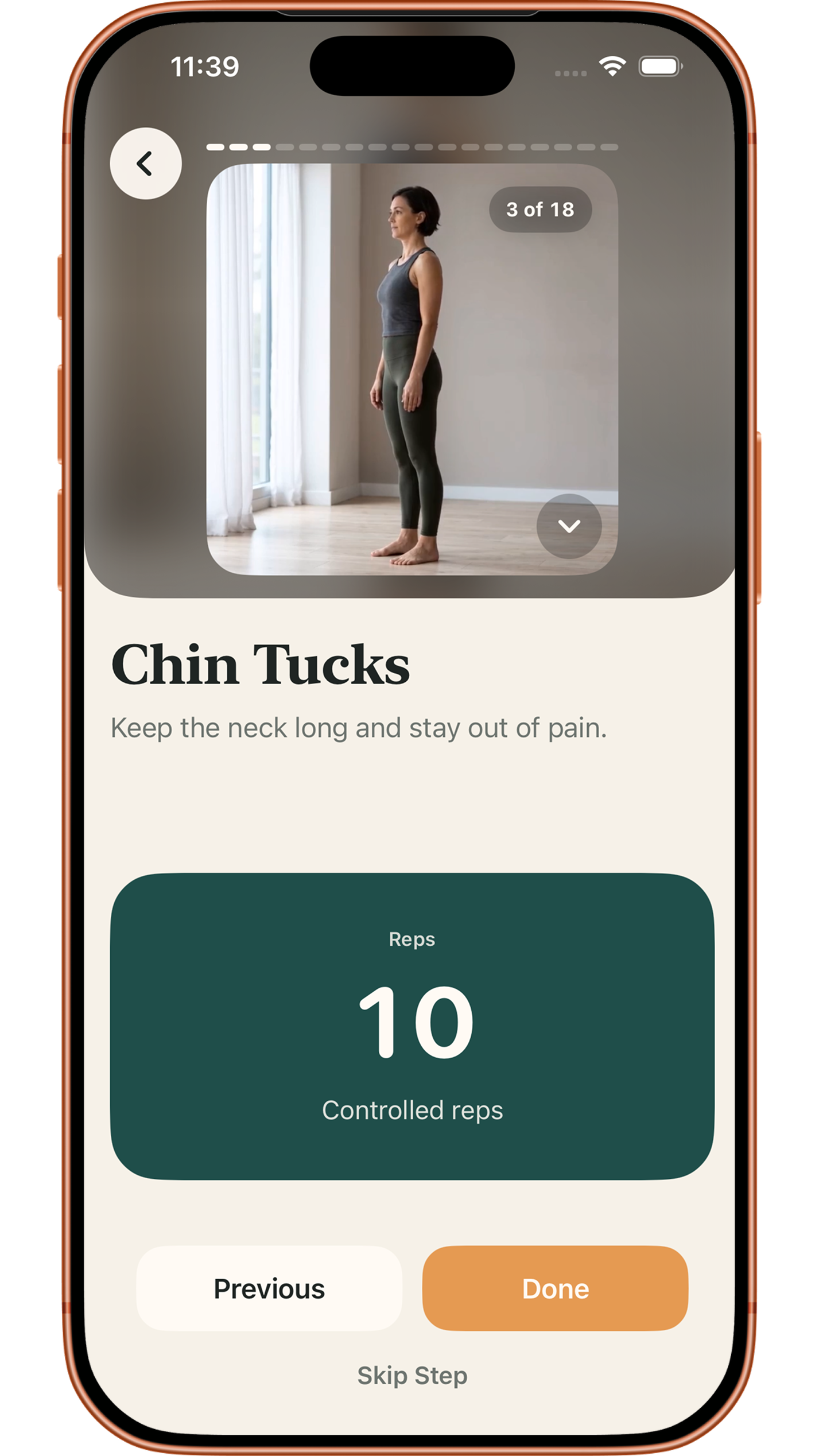
Neck and shoulders are a primary onboarding focus because they are easy for users to recognize after desk work, phone use, and long screen sessions.
This is a direct onboarding goal in the app and a high-intent search pattern for users looking for daily help.
The library includes a focus area for neck and shoulder routines with desk tension relief language.
Renava talks about tension, control, movement, and consistency rather than promising medical treatment.
The value is not just naming exercises. Renava puts movements into a short sequence with timing, cues, and a beginning and end.
Gentle neck-control patterns that teach users to move without pushing into painful range.
Scapular movement helps users feel the shoulder blades instead of only stretching the neck.
A calmer sequence for neck and shoulder awareness during the first-week release session.
Neck and shoulder content can easily sound aggressive or medical. Renava keeps the page and app experience grounded in safe, practical guidance.
Workout cues remind users to stay long through the neck and avoid painful positions.
Breathing cues can lower the intensity of the session and help it feel less like a forced stretch.
Sessions are short enough that users can repeat them consistently instead of waiting for a bad tension day.
Neck and shoulder work is usually the entry point, but Renava connects it to chest opening, upper-back mobility, and support work over time.
The first stage helps the user notice and release common neck, shoulder, and upper-back patterns.
Chest, ribs, and thoracic movement prevent the routine from becoming only neck stretching.
Later sessions add shoulder control, upper-back pull patterns, and posture integration.
Renava provides guided wellness routines that may support daily movement and consistency around the neck and shoulders. It does not diagnose or treat medical conditions.
Examples include chin tucks, neck nods, shoulder blade glides, side neck release, slow arm raises, shoulder rolls, wall slides, and breathing reset patterns.
Stop any movement that causes pain, dizziness, numbness, or unusual discomfort.
Renava can be relevant for people searching around tech neck or screen-time posture, but it avoids medical diagnosis language and focuses on guided daily movement.
Renava is designed for short repeatable practice. The right rhythm depends on your body, schedule, and comfort, and medical questions should go to a qualified professional.
Use Renava for short, structured movement that fits into screen-heavy days without forcing intensity.
Explore the connected parts of the Renava posture system: the app, routines, program path, desk resets, focus areas, and guided exercises.