
Guide
Starting posture exercises: a beginner’s first guided session
Begin by learning one comfortable movement and the controls of a guided session. Watch, pause and return to rest before adding more exercises. A small session you can repeat is a clearer starting point than an ambitious correction deadline.
Choose one clear starting point
Start with a movement whose setup you can make stable. The shoulder-circle guide has a seated demonstration and written cues. You do not need to decide on a full 90-day schedule before learning how one movement feels to follow.
Your first practice, step by step
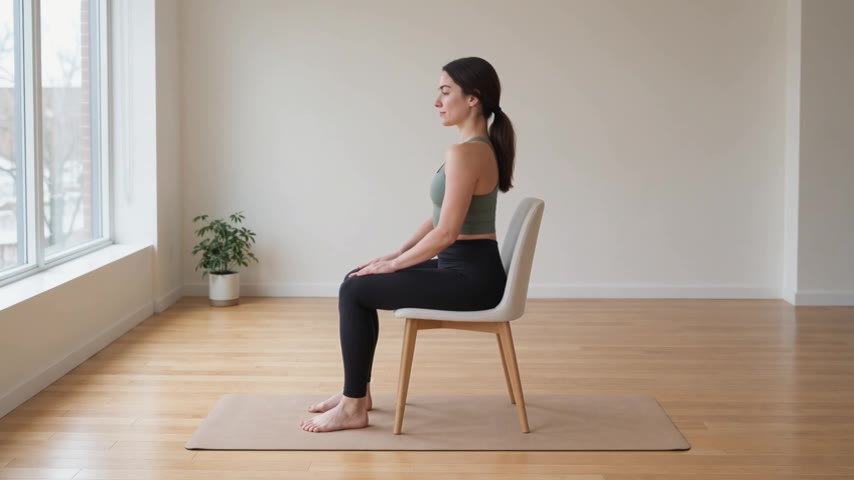
- Set a stable chair without wheels and support both feet. Place the screen where you can see it easily.
- Watch the demonstration without exercising. Read the start, movement and return cues.
- Pause the clip and try the small movement at your own pace. Release between repetitions.
- If comfortable and you understand the movement, use the 30-second shoulder-circle interval from the open sample. You can stop earlier.
- Add another movement only after viewing its own instructions. Record what you did rather than marking an unfamiliar full sequence complete.
Learn the controls before following a session
In the app, read the session preview and equipment before starting. Use pause for setup, switching positions or rereading a cue. A countdown describes the format; it does not tell you to ignore discomfort. On the website, the videos are silent and can be watched without following in real time.
What to do when something does not fit
| Situation | Next action |
|---|---|
| You cannot keep up with the loop | Watch, pause and practise more slowly. |
| You do not have the stated support | Choose a session with a setup you have. |
| You need to skip a movement | Skip it and record the shorter practice honestly. |
| You feel pain, dizziness or numbness | Stop. Seek appropriate advice if symptoms persist or you are unsure what is suitable. |
Decide what to repeat next time
After the session, note the movement you followed, any pause or skip, and whether the setup worked. Repeat a manageable format before adding several new movements or a longer session. Consistency can be reviewed; a fixed date for a change in appearance cannot be promised.
Questions about this guide
Do I have to start with the full program?
No. You can first view a single public movement guide or the short seated sample. Use the program when you want an arranged sequence and have checked the generated session.
How do I know whether to add another movement?
First make sure you understand the setup, movement and release of the current one and can follow comfortably. View the next technique before combining it. An app cannot assess suitability for an injury from completion alone.
What if I miss the next day?
Return to a manageable session when it fits. Do not force extra sessions just to repair a streak or treat a missed day as failure.
Sources and editorial notes
External sources provide background and have not reviewed or endorsed Renava. Instructions and routine details describe the app team’s own material.
Follow your next session in Renava
See guided sessions, the program and your practice record. Check the current free and paid access in the app or your store before subscribing.


Your next useful step
 GuideShoulder rolls: seated technique and common mistakesLearn seated shoulder rolls with a Renava demonstration, clear movement cues, common mistakes and a simple way to use them during a desk break.GuideRenava posture training app for iOS and AndroidSee how Renava works on iOS and Android: guided posture sessions, short routines, a 90-day program, practice tracking and clear access information.GuideHow long does it take to improve posture? Practice and progressReview posture practice without a fixed deadline: what to record, what a 90-day program means and why photos or streaks do not prove a clinical result.