
Guide
Wall exercises: choose the right slide or angel variation
A forward-facing wall slide and a back-to-wall angel are different movements. In the towel-assisted slide shown here, the hands rest on a towel against the wall and slide upward. In the angel, the back is near the wall as the arms rise. Choose the matching guide; neither movement is a test of perfect posture.
Compare the two variations
| Variation | Setup and movement | Matching guide |
|---|---|---|
| Forward-facing wall slide | Face a smooth wall with both hands resting on a towel; slide the towel upward and return within comfortable range. | The towel-assisted wall-slide guide shows this hand support. |
| Back-to-wall angel | Back near the wall; arms move from a comfortable W toward a Y and return without forcing contact. | The wall-angel guide shows the back-to-wall version. |
Check before the first movement
- Choose clear wall space and stable footing. Remove obstacles around the arms.
- Read the matching guide and inspect its illustrated support points; do not combine the setup from one variation with the name of another.
- Start with a small range you can control and return slowly. Avoid bouncing or making the lower back arch to reach higher.
- Reduce range or stop if contact requires force, the shoulders shrug hard or symptoms occur. A higher hand position is not a score.
Do not force every point against the wall
Body proportions and comfortable range differ. Do not push the head, lower back, wrists or elbows into contact to imitate a picture. The illustration explains one movement setup; it cannot diagnose why a position is difficult.
If an individual clinician has given you a particular wall variation, use that plan rather than switching to a similarly named internet exercise.
Choose a different setup when needed
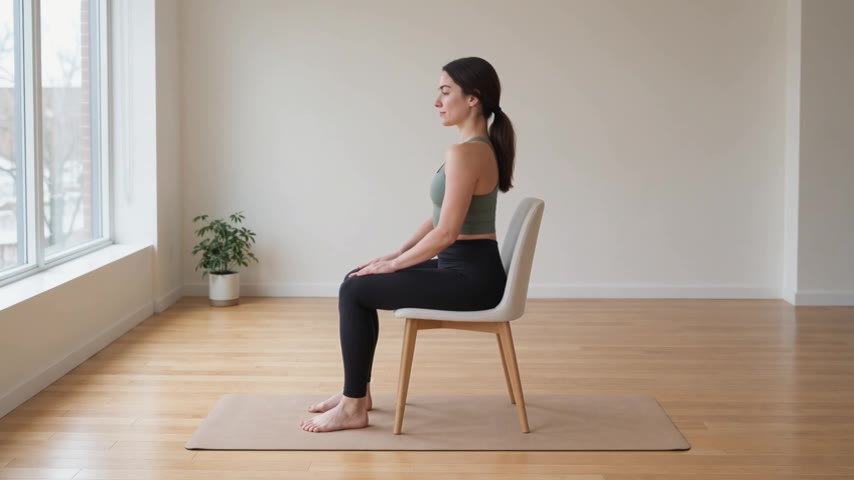
A wall movement is optional. If overhead reaching or the wall position does not fit, the public seated sample has shoulder circles, upper-body turns and a gentle shoulder-blade movement. It is a different sequence, not a wall-slide substitution for a medical plan.
Follow the detailed guides for written steps and illustrations. More exercise names are not automatically a better routine.
Questions about this guide
Are wall slides and wall angels the same?
No. Facing-wall slides and back-to-wall angels have different starting positions and arm paths. Follow the guide for the version you intend to use.
Must my head, elbows and wrists all touch the wall?
Do not force contact or arch the back to achieve it. Use the comfortable range and supports explained in the specific guide.
How many repetitions should I do?
These technique pages explain movement rather than a universal dose. Use the interval shown in a suitable guided session or follow individual instructions you have received.
Do I need a wall for a useful movement break?
No. The seated sample provides a different setup. A change of activity or a walk can also be the useful action for a break.
Sources and editorial notes
External sources provide background and have not reviewed or endorsed Renava. Instructions and routine details describe the app team’s own material.
Follow your next session in Renava
See guided sessions, the program and your practice record. Check the current free and paid access in the app or your store before subscribing.


Your next useful step
 GuideShoulder rolls: seated technique and common mistakesLearn seated shoulder rolls with a Renava demonstration, clear movement cues, common mistakes and a simple way to use them during a desk break.GuideA 90-day posture program: format, first week and accessPreview Renava’s 90-day posture program: stages, first week, a detailed eight-minute session example, equipment, maintenance and paid access.