
Guide
Wall angels: back-to-wall setup, reach and return
A wall angel uses the wall behind you as feedback while your bent arms travel upward and return. Start with a comfortable W-shaped arm position and use only the range you can control. Do not force your head, wrists or lower back into a position that feels strained.
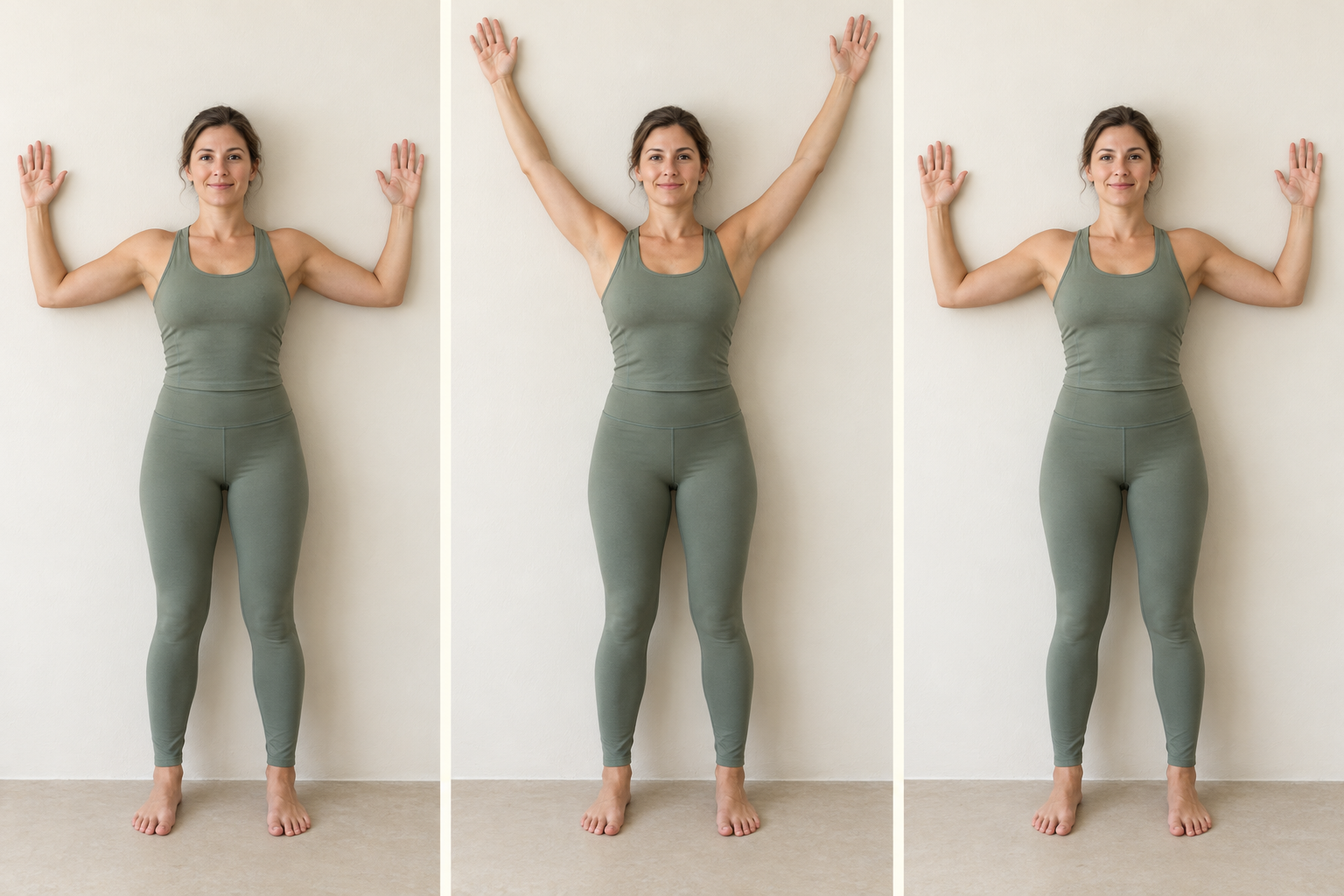
This is the back-to-wall variation
Stand with your back to a clear wall. Let your feet sit a small comfortable distance forward so you can stand steadily. The illustrations show a front view with the wall behind the figure. It is a simplified explanation of the movement, not an assessment of your body.
This differs from the towel slide facing the wall. There is no towel, band or weight in the variation shown here.
Move from a W toward a comfortable Y
- Bring your arms out to the sides with elbows bent, resting the backs of your arms against the wall where comfortable. Keep breathing.
- Move your arms upward slowly, allowing your elbows to open as you reach. Keep the movement comfortable and controlled rather than aiming for the highest possible point.
- Stop before maintaining contact requires force or an exaggerated back arch. Lower the arms to the starting W and relax.
Use contact as feedback, not a pass-or-fail test
The wall helps you notice what moves as you raise your arms. It does not create a universal shape that every person must match. If a comfortable starting position is not available, choose a different movement instead of pushing your wrists or head backward.
Try one small, slow pass to learn the sequence. Your available range and any individual restrictions take priority over a generic repetition target. The illustration does not prescribe a hold or a daily dose.
Common ways to lose the intended movement
| What to notice | What to do next |
|---|---|
| The lower back arches as the arms rise | Reduce the reach instead of chasing height. |
| You press the head or hands backward | Release the pressure; do not force the starting shape. |
| The arms drop quickly | Shorten the range and return deliberately. |
| Pain, tingling or dizziness appears | Stop and seek individual guidance. |
Choose the next step for your task
Use wall-slide instructions if you want the facing-wall variation. Use the guided exercise sequence to explore a small routine with demonstrations, or read the program page to see how Renava organises daily practice. Wall angels alone are not a complete posture program or a diagnostic test.
Questions about this guide
What if my wrists do not reach the wall?
Do not force them backward or arch to manufacture contact. A smaller comfortable range or a different exercise can be more appropriate; seek individual advice if you are unsure.
Is a wall angel a posture test?
This page teaches a movement. It does not assign a posture score or diagnose a problem from how closely you match the illustration.
Should I hold the top position?
This guide focuses on a controlled upward movement and return. Follow an individual plan if it prescribes a hold; no universal hold time is assigned here.
Sources and editorial notes
External sources provide background and have not reviewed or endorsed Renava. Instructions and routine details describe the app team’s own material.
Follow your next session in Renava
See guided sessions, the program and your practice record. Check the current free and paid access in the app or your store before subscribing.